
Maintaining Good Exercise Habits: A Guide to Staying Active and Healthy
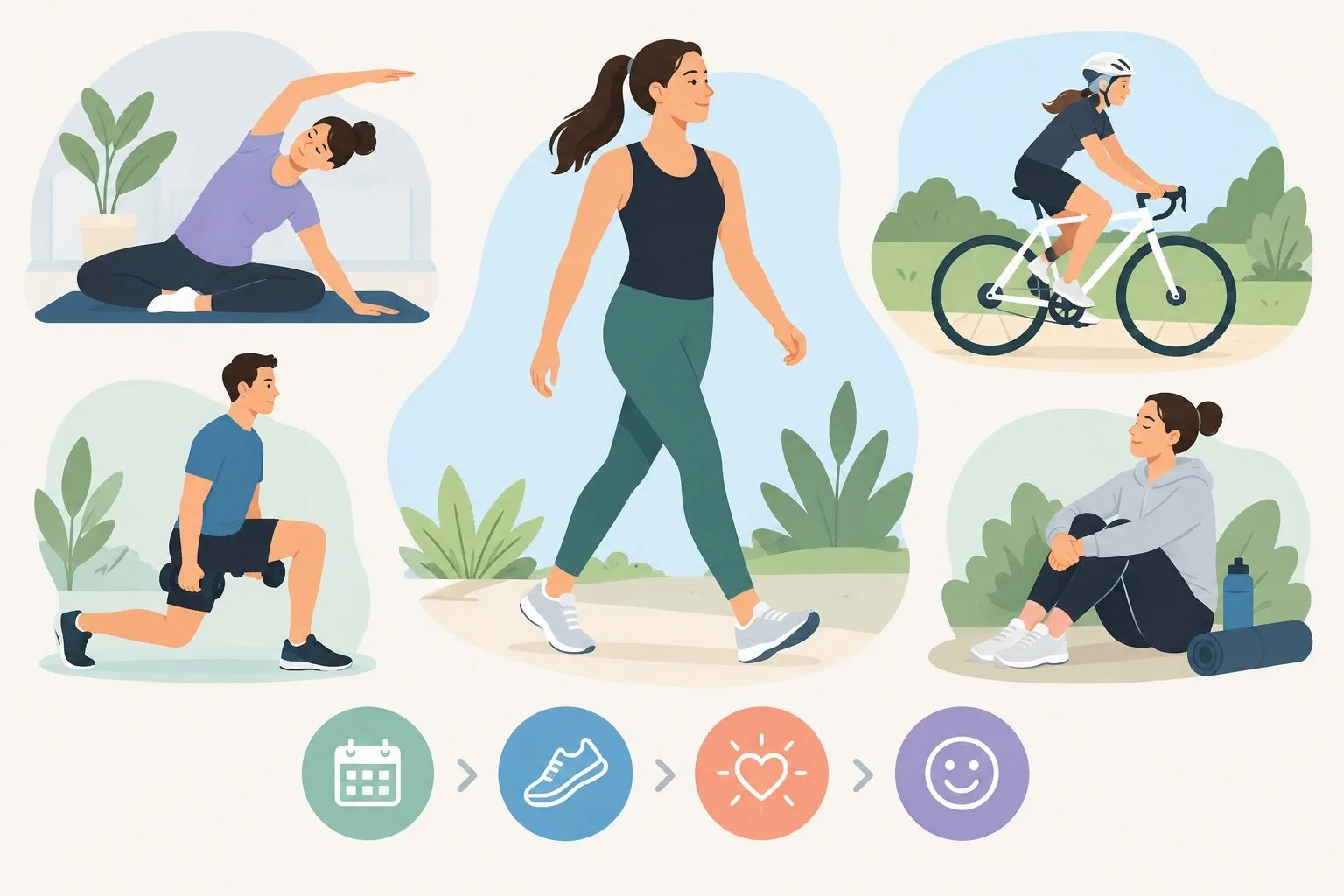
Maintaining Good Exercise Habits: A Guide to Staying Active and Healthy
Staying active is one of the best things you can do for your physical and mental health. Regular exercise can help maintain strength and mobility, support cardiovascular health, improve sleep and mood, and reduce the risk of many chronic health conditions.
However, knowing that exercise is good for us is one thing, actually maintaining an exercise routine can be a challenge.
Busy schedules, tiredness, illness, injuries, pain, changing priorities or simply losing motivation can all make it difficult to stay consistent. The good news is that maintaining an active lifestyle does not require a perfect exercise routine. Small, sustainable habits can make a meaningful difference over time.
1- Consistency matters more than perfection
You may think that exercise only "counts" if you complete a full workout or reach a particular intensity. In reality, physical activity comes in many forms.
Walking to the shops, taking the stairs, gardening, cycling, playing with your children, going for a swim or completing a structured strength session can all contribute to your overall activity levels.
Rather than aiming for the perfect exercise program, focus on finding activities that you enjoy and can realistically maintain.
Consistency over time is more important than occasional bursts of motivation.
If you miss a few days or even a few weeks it does not mean you have failed. Your next opportunity to move is a chance to start again.
2 - Set realistic and meaningful goals
A common reason exercise habits don't last is that goals are too ambitious or disconnected from what actually matters to us.
Instead of focusing only on outcomes such as losing weight, increasing fitness or reaching a particular number on the scales, consider what you would like exercise to help you do.
For example:
Walk comfortably for 30 minutes
Keep up with your children or grandchildren
Return to your favourite sport
Feel stronger carrying groceries
Be able to hike on the weekend
Improve your balance and confidence
Manage your back or joint symptoms
Have more energy throughout the day
Having a meaningful reason to exercise can make it easier to stay motivated when enthusiasm naturally fluctuates.
3 - Start small
If you have not exercised regularly for a while, there is no need to jump straight into a demanding program.
Starting with something manageable can help you build confidence and establish a routine.
For example, you could begin with:
A 10–15 minute walk
A few simple strengthening exercises at home for 10 minutes
Taking the stairs once a day
A short mobility routine in the morning
One exercise class per week
Walking during your lunch break
Once these activities become part of your routine, you can gradually increase the duration, frequency or intensity.
A small amount of exercise that you do consistently is more valuable than an ambitious program that you abandon after a few weeks.
4 - Find activities you actually enjoy
Exercise does not have to mean going to the gym. The best form of exercise is often the one you enjoy enough to keep doing.
Consider activities such as:
Walking or hiking
Swimming
Cycling
Dancing
Pilates or yoga
Strength training
Running
Team sports
Rock climbing
Gardening
Exercise classes
Playing actively with your children
You may also enjoy varying your activities depending on your mood, energy levels or schedule.
If you dislike a particular type of exercise, there is no rule saying you have to do it.
5 - Make exercise part of your routine
Relying entirely on motivation can make exercise difficult to maintain. Motivation naturally comes and goes.Instead, try making exercise a regular part of your day or week.
You could:
Schedule exercise in your calendar
Walk at the same time each day
Exercise immediately before or after another established habit, such as having your morning coffee
Keep your exercise clothes somewhere visible
Prepare your equipment the night before
Choose a convenient and/or enjoyable gym or walking route
Arrange to exercise with a friend
The goal is to reduce the amount of thinking required to get started. Over time, exercise can become something you simply do, rather than something you have to continually convince yourself to do.
6 - Don't forget everyday movement
Exercise is important, but so is the movement you do throughout the rest of your day. If you spend long periods sitting at a desk, driving or watching television, try breaking up prolonged periods of sitting with regular movement.
You could:
Stand up and walk around every 30–60 minutes
Take a short walk during a break
Walk while talking on the phone
Use the stairs when practical
Walk to nearby shops
Do some household chores
Spend time outdoors
These small changes can add up across the day.
7 - What if you have pain?
Pain can be one of the biggest barriers to maintaining exercise habits.It is understandable to become cautious about movement when something hurts. However, pain does not always mean that movement is causing damage.
For many musculoskeletal conditions, appropriately dosed exercise and gradual exposure to movement can be an important part of recovery. That doesn't mean you should simply push through severe or worsening pain. Instead, the amount and type of exercise may need to be adjusted to your current capacity.
A physiotherapist can help you understand your symptoms, identify appropriate exercises and develop a gradual plan to help you return to the activities that matter to you.
Need help getting started?
If pain, an injury, lack of confidence or uncertainty about what exercises are appropriate is preventing you from staying active, a physiotherapist can help.
At Thornleigh Performance Physiotherapy, we can assist in assessing your individual needs, explain what may be contributing to your symptoms and develop a tailored exercise program that helps you safely build your strength, mobility and confidence.
Whether you're returning to exercise after an injury or simply looking to become more active, we can guide you through the journey.