
What is the Perfect Sleeping Position?
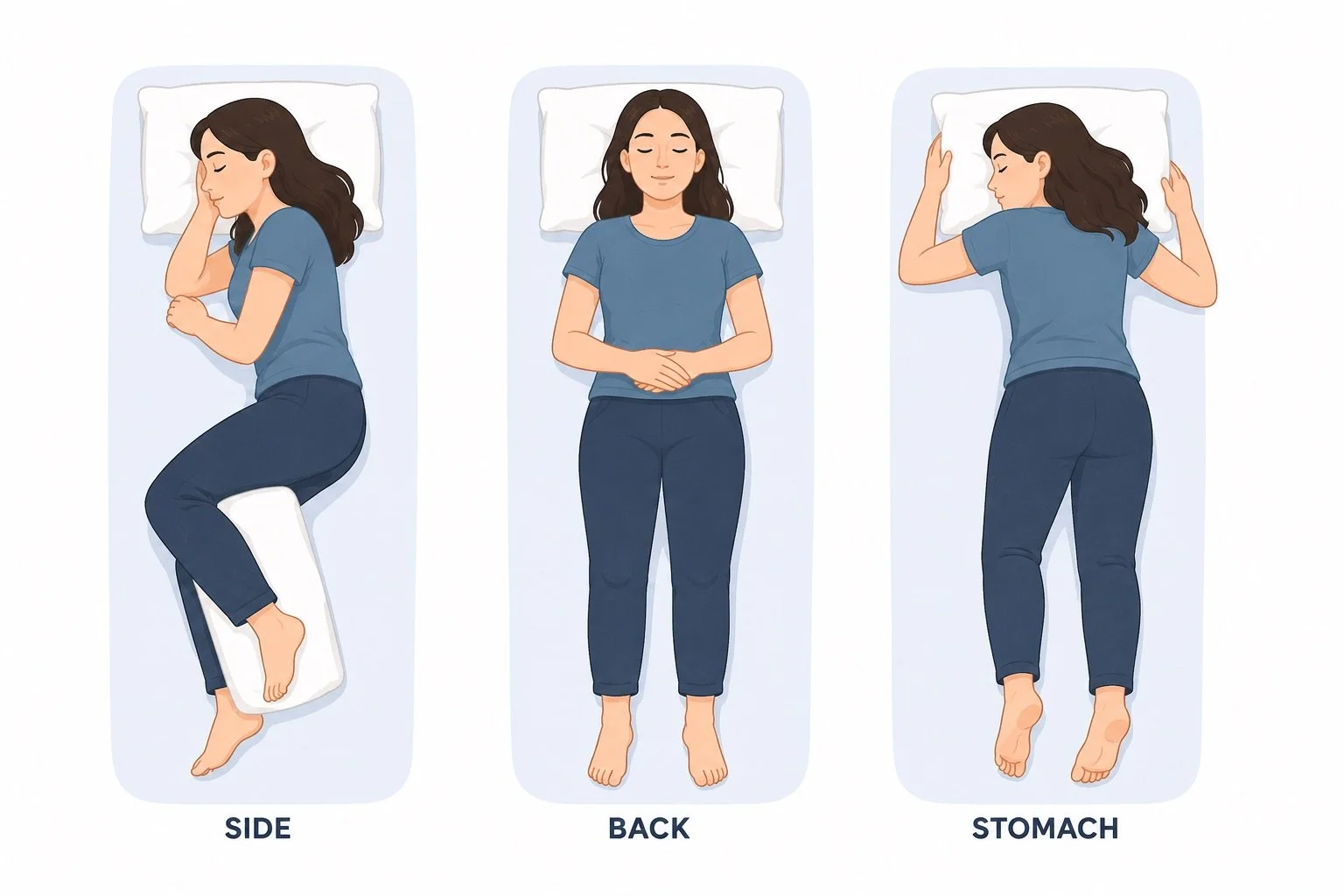
There is no single "perfect" sleeping position that suits everyone. The best sleeping position depends on your individual needs, health conditions, and comfort. For example, certain positions may help reduce back pain, neck pain, snoring, or acid reflux, while others may be more suitable during pregnancy.
Regardless of your preferred sleeping position, it is not ideal to remain in the exact same position for prolonged periods. Our bodies naturally move throughout the night to relieve pressure on muscles, joints, and tissues. Staying in one position for too long can lead to stiffness, discomfort, and increased pressure on certain areas of the body.
The key to good sleep is maintaining a comfortable, well-supported position that keeps your spine in a neutral alignment while allowing your body to move naturally during the night.
Side Sleeping
Side sleeping is one of the most recommended positions for most people. It helps keep the spine relatively neutral and may reduce snoring and acid reflux.
Tips for side sleepers:
● Use a pillow that keeps your neck aligned with your spine.
● Avoid sleeping with your arm tucked under your head.
● Place a pillow between your knees to reduce stress on your hips and lower back.
Sleeping on Your Back
Back sleeping allows weight to be distributed evenly across the body and can help maintain the natural curves of the spine.
Tips for back sleepers:
● Choose a pillow that supports the natural curve of your neck.
● Place a pillow under your knees to reduce pressure on the lower back.
● Avoid using multiple pillows that push your head too far forward.
Sleeping on Your Stomach
Sleeping on your stomach is generally considered the least favourable position, as it often forces the neck into prolonged rotation and can increase strain on the lower back.
If you're a stomach sleeper and find it difficult to change positions, try:
● Using a thinner pillow or no pillow under your head.
● Placing a pillow under your pelvis to help reduce lower back strain.
● Gradually training yourself to sleep on your side.
What’s the Perfect Pillow?
There is no single "perfect" pillow for everyone. The best pillow is one that supports your neck and keeps your head aligned with the rest of your spine.
A pillow that is too high or too flat can contribute to neck pain and headaches. Side sleepers typically need a slightly thicker pillow, while back sleepers may prefer a medium-height pillow.
What Kind of Mattress Should I Have?
Although many people believe a very firm mattress is best, research suggests that medium-firm mattresses are often more comfortable and supportive for people with back pain.
More importantly, your mattress should support your body evenly and allow you to maintain a comfortable sleeping position throughout the night.
When Should You Seek Help?
Occasional stiffness in the morning is common. However, if you regularly wake up with pain, headaches, numbness, or discomfort that affects your daily activities, it may be worth discussing your symptoms with a physiotherapist.
A physiotherapist can assess your posture, movement patterns, and sleeping habits to help identify contributing factors and provide tailored advice to help you sleep and wake up more comfortably. At Thornleigh Performance Physiotherapy, our team can help you get to the root of your morning aches and pains and put together a plan to help you move and sleep better. Call us on (02) 8411 2050. to book an appointment with us today.