
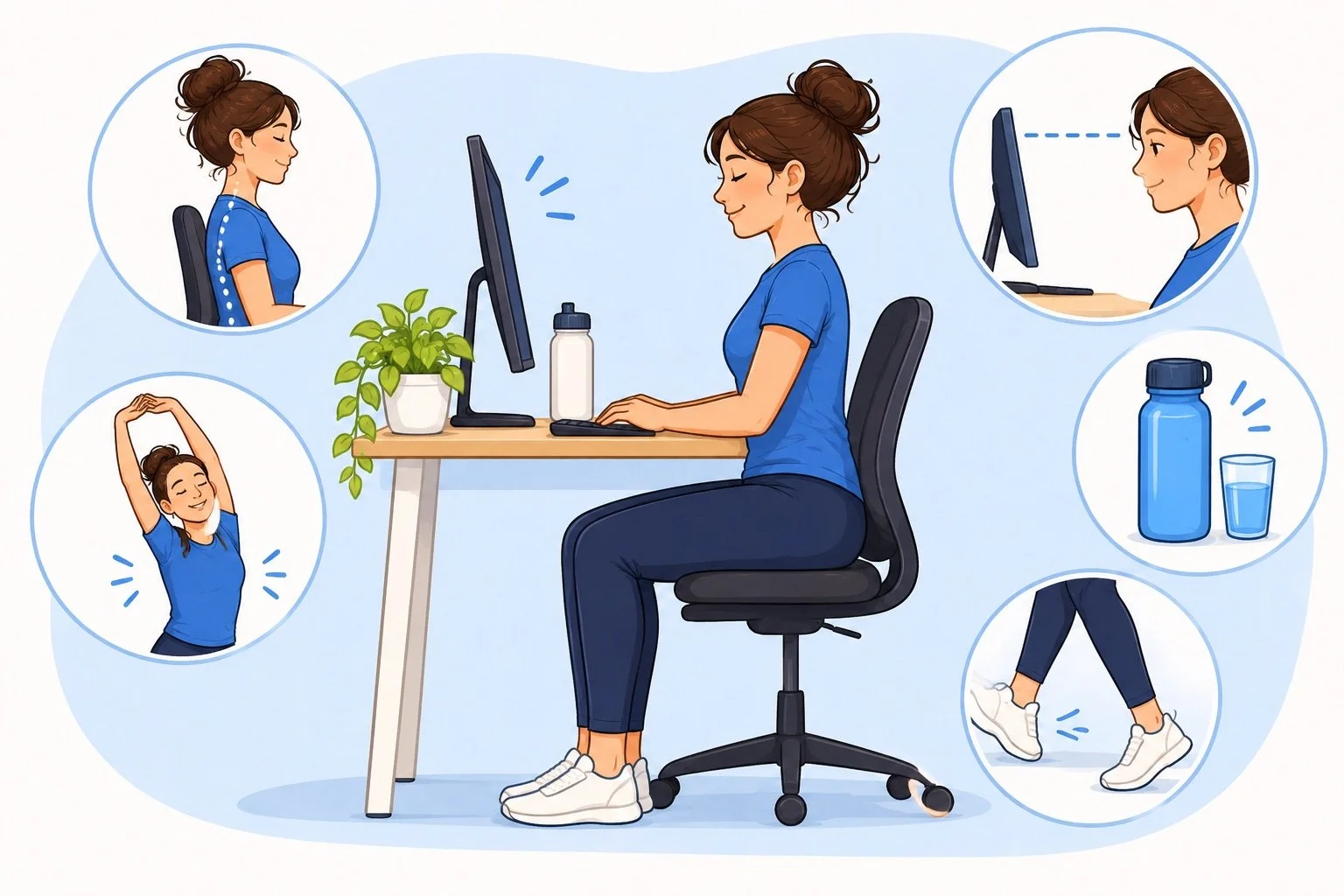
If you spend most of your day at a desk, you’ve probably felt it: A stiff neck by lunchtime, tight shoulders, or an achy lower back by the end of the day. The good news is that a few small changes to your workspace can make a real difference to how you feel.
Here are some simple tips to get your desk working for you, not against you.
Set your screen at the right height
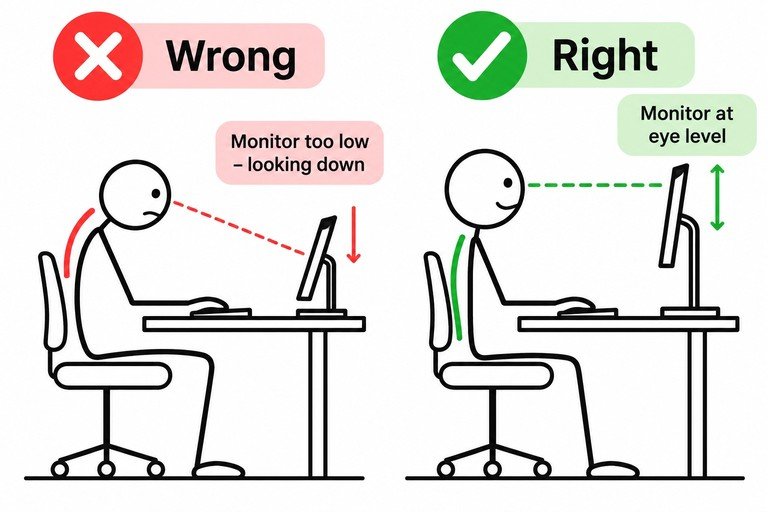
Position your monitor so the top of the screen sits at about eye level, roughly an arm’s length away. If you’re looking down or craning your neck neck forward all day, your neck and shoulders can end up working overtime. If you use a laptop, a stand and a seperate keyboard can help.
Check your chair position
Aim to have your feet flat on the floor, knees about hip height,and your lower back supported. If your feet dont reach the floor comfortably, a footrest can help. Adjust the backrest so it gives your lower back some support rather than leaving a gap.
Keep your keyboard and mouse close
Reaching too far forwards can strain your shoulders and arms. keep your keyboard and mouse close enough that your elbows can rest comfortably by your sides, with your forearms roughly level with the desk.
Move regularly
Even the best setup won’t help if you stay in one postion for hours. Try to stand up, stretch or walk around every 30-45 minutes. Set a time, take phone calls on your feet, or walk over to a collegue insead of sending an email.
Simple Desk exercises
Get up from your chair and move around
Roll your shoulders
Stretch your wrists
Retract your next
Twist your body
Look after your eyes too
Try the 20-20-20 rule: The 20,20,20 eye rule is a simple habit designed to help prevent digital eye strain from looking at screen for to lon or to closely.
How it works: Every 20 minutes, look at something about 20 feet (6 metres) away for 20 seconds. It’s an easy easy way to give your eyes a break from the screen.
Personalise it
There is no single perfect posture for everyone. Bodies are different and so are workspaces. The best setup is one that feels comfortable for you and the best position is usually your next position, so keep changing it up.
When to seek help
Occasional tightness after a long day is common, but don’t ignore the ongoing symptoms. If you have pain that lasts more than a couple of weeks, keeps coming back, or is affecting your sleep/daily activites, It’s a good idea to get it checked.
Our friendly physiotherapist at Thornleigh performance physiotherapy can assess what’s going on and heko you get back to feeling your best. Book an appointment online or call us on 02 8411 2050.