
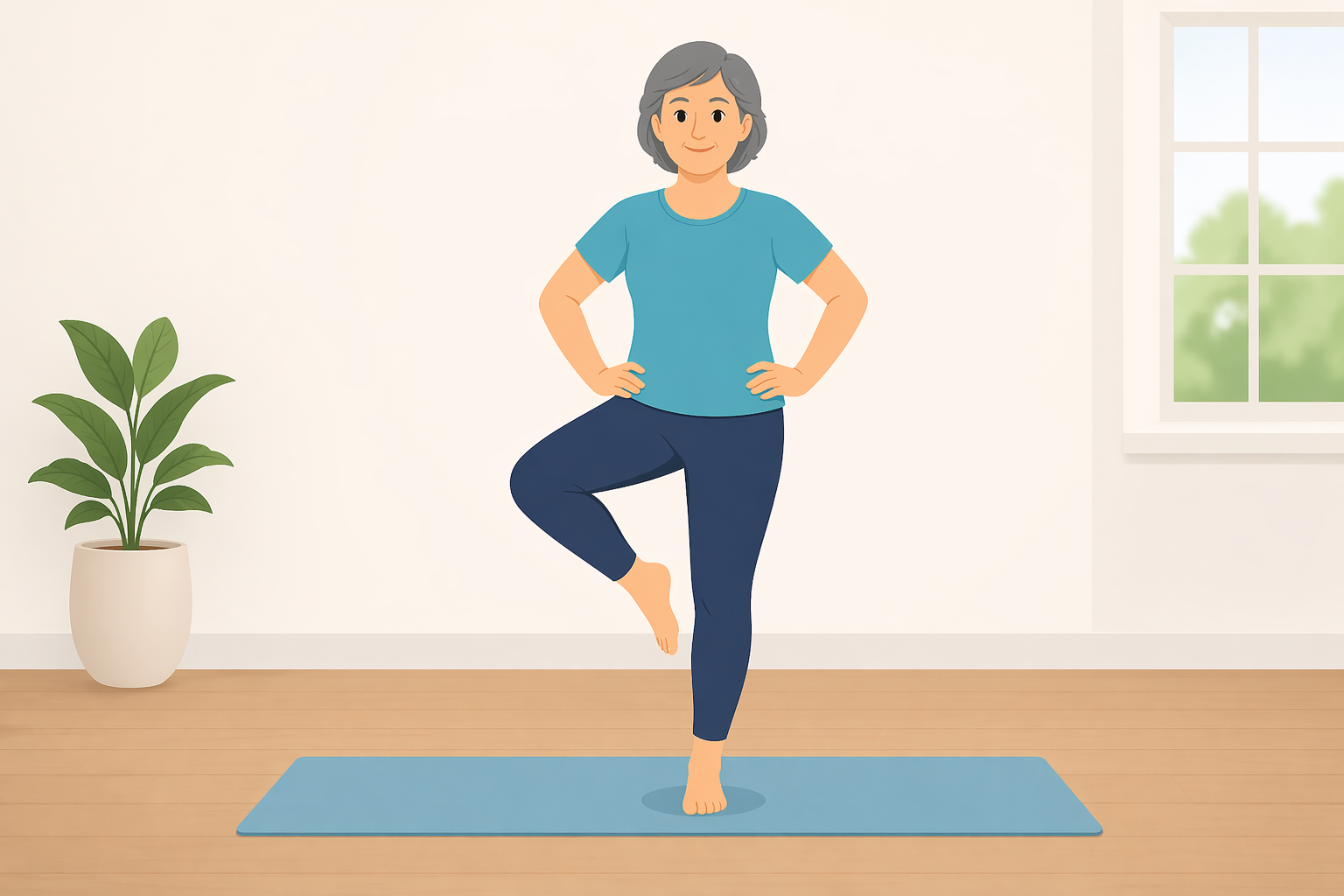
Staying active isn’t just about achieving fitness or weight loss goals, it’s also essential for maintaining function, confidence, and safety. This becomes increasingly important with age, as one key aspect of health that is often overlooked is balance.
Improving balance is one of the most effective ways to reduce the risk of falls. A common misconception is that balance only matters when standing; however, your ability to control your centre of mass is just as important when sitting, transitioning between positions, or even getting in and out of bed.
The Three Core Balance Systems
Visual system - Your eyes provide information about your body’s position in relation to your surroundings.
Vestibular system (inner ear) - A system of fluid-filled canals that detect movement, head position, and gravity.
Proprioception (muscles and joints) - Sensory receptors in the skin, muscles, and joints provide feedback about body position and movement. For example, receptors in the feet detect pressure distribution and help your brain recognise changes in balance or uneven surfaces.
What Happens to Balance as We Age?
Reduced strength in the legs and core, making stabilisation more difficult
Decreased joint flexibility
Decline in vision
Reduced responsiveness of the vestibular system
Slower reaction times
Real-Life Situations Where Balance Matters
Getting out of bed at night (especially in low light)
Walking on uneven surfaces
Stepping onto a curb
Turning quickly or navigating around obstacles - Reaching for items on a shelf
Why Balance Training Is Important
Reduces the risk of falls
Maintains independence
Builds confidence in movement
Supports overall strength and mobility
Examples of Balance Exercises to Try at Home
Heel-to-toe walking
Walk in a straight line, placing one foot directly in front of the other.
Progressions: Add head turns, close your eyes, or walk backwards.
Regressions: Widen your stance or practice standing in a tandem position.
Real-world application: Helps with navigating tight spaces and crowds.
90° Marches (Standing March)
Lift one knee up to hip height (90°) and alternate legs in a slow, controlled marching motion for 20–30 seconds.
Progressions: Slow the movement further, add a pause at the top, or perform without holding on. You can also try eyes closed for an added balance challenge.
Regressions: Lightly hold onto a wall or stable surface, or reduce the height of the knee lift.
Real-world application: Mimics walking, stepping, and stair climbing while improving balance and coordination.
Step-ups
Step onto a stair or platform, then slowly lower back down.
Progressions: Increase speed or height.
Regressions: Use a lower step or perform marching on the spot.
Real-world application: Replicates stairs and curbs.
Assisted Squats
Stand with feet shoulder-width apart and hold onto a wall or the back of a chair for support. Slowly lower into a squat, then return to standing.
Progressions: Reduce how much you rely on your hands, slow the movement, or increase depth of the squat.
Regressions: Sit-to-stand from a chair, using hands as needed for support.
Real-world application: Improves strength and control for everyday movements like sitting down, standing up, and getting in and out of a chair.
Balance with Movement (Star Reach)
Stand on one leg and reach the other leg in different directions, creating a star shape.
Progressions: Increase reach distance or complexity of tasks.
Regressions: Begin with smaller movements, head turns, or a wider base of support.
Real-world application: Reaching, bending, and changing direction.
Balance is a fundamental component of how your body functions in everyday life. Whether your goal is to prevent injury, improve performance, or maintain independence, balance training is one of the most valuable investments you can make in your health.
If you’re unsure where to start or have a history of injury, a physiotherapist can design an individualised program tailored to your needs.